


Originally published on crnobelo.com
At a time when orchestral culture in Macedonia was facing challenges, a small group of musicians from Bitola with a big vision managed to create something that is recognised today at national and regional level.
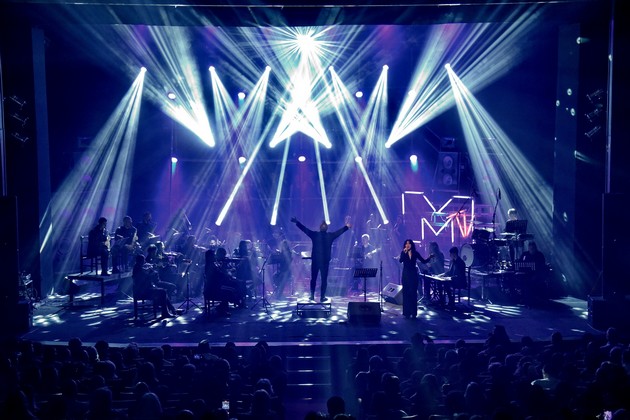
Vladimir Dimovski, a violist by profession and a conductor by talent and passion, founder of the National Institution Bitola Chamber Orchestra and head of Orkestar DIVA, has for a decade stood behind some of the best-known projects in the country: Flowers Symphony, Stars Symphony, Vienna in Bitola, Rock Symphony, MTV The Greatest Hits and many more.
With a team of dedicated musicians and an audience that grows from concert to concert, Dimovski renewed the orchestral tradition in Bitola, created a new contemporary sound and took the orchestra where nobody believed it could go – from local stages to a stadium with more than 5,000 visitors and the “Golden Ladybug of Popularity” award for the most popular orchestra of 2024.
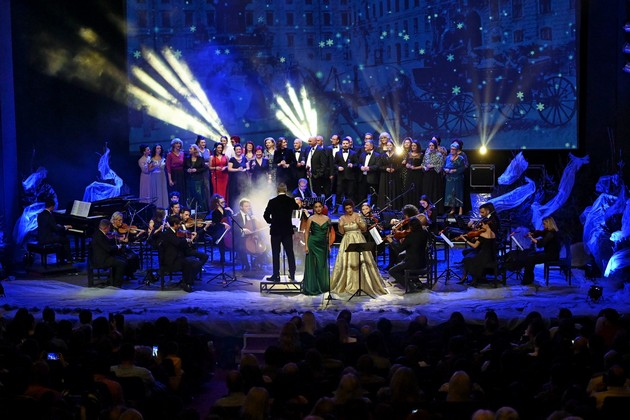
In this interview he talks about the beginnings, the difficulties, the revival, the founding of the institution, the rebrand as DIVA, the relationship with the audience and the road ahead in 2026.
1. How did your story with the orchestra begin, and what motivated you to revive this tradition?
It all started with a love of music and a sense of duty towards the city I grew up in. At a time when orchestral culture seemed forgotten, a few musicians from Bitola decided to show that love of music and of the city can work miracles. So in 2013, with a lot of love, vision and persistence, we brought the orchestra back to life. It was the start of a road that today, looking back, seems incredibly long and worthwhile.
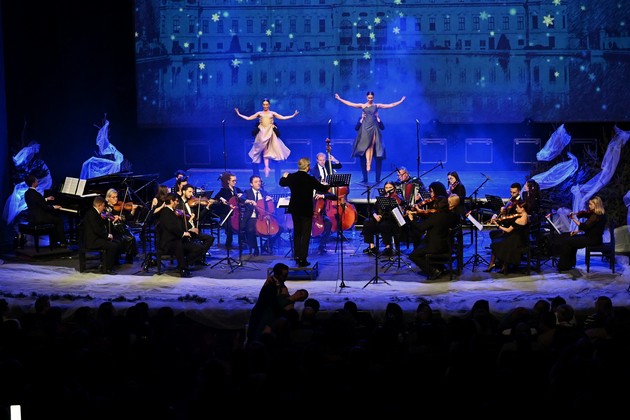
2. The first years surely weren’t easy. What did you face, and what kept you going?
We faced almost everything: a lack of money, space, support and sometimes understanding. But we had something that cannot be bought – faith. Faith in the idea, in the work, in the team and in the music. That was enough to keep going, step by step. And every round of applause from the audience was proof that we were on the right path.
3. Which moments shaped you most as an artist?
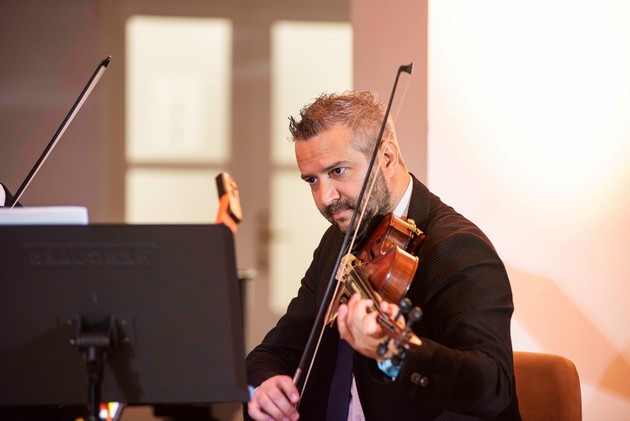
Every concert is a moment that changes you. But I was shaped most by the situations where you have to be the conductor, the organiser, the motivator and the friend all at once. When you see the spark in the musicians’ eyes and the satisfaction in the audience, then you know why you do it.
4. How do you see the institutional development of the orchestra?
The founding of the National Institution Bitola Chamber Orchestra is something I am extremely proud of. The road to it was long and hard, but it was worth it. At last the city has an institution that nurtures classical art, with employed musicians, its own programme and a future. That is a big victory not only for us, but for culture in Macedonia.
5. How important is it for a city like Bitola to have an orchestra?
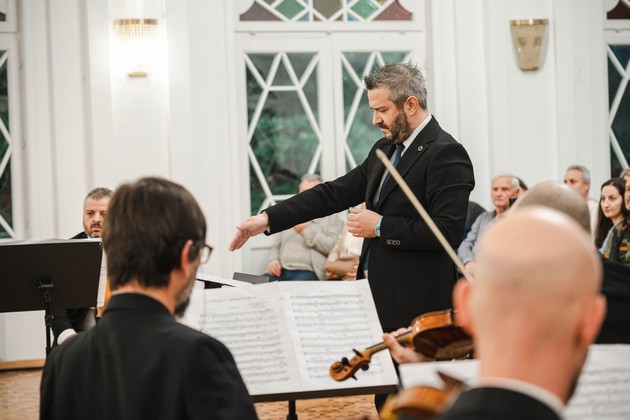
It is not just important, it is essential. An orchestra is a mirror of a city’s spiritual life. It is an institution that brings generations together, creates art, educates young people and inspires.
6. Although you founded the National Institution Bitola Chamber Orchestra, the orchestra that worked through an association carried on, and you recently rebranded it. What led you to the change, and what does the new name stand for?
The rebrand was a natural step. Over the past two years there was confusion between the institutional orchestra (relatively young, founded in 2023) and the orchestra that continued to work through the association “Music Art – Bitola”, with a long history since 2013 (now Orkestar DIVA). There was another reason too: the orchestra had grown, and DIVA is a symbol of maturity, artistic excellence and the courage to move forward. Historically, the ensemble of Orkestar DIVA has gone through three stages:
* Bitola Chamber Orchestra (Kameren orkestar na Bitola) – This is the name under which the orchestra existed the longest (from 2013 to 2023). Under this name the ensemble performed all over Macedonia and built its first regional reputation.
* Bitolski Kameren Orkestar
After the National Institution was founded in 2023, I decided that the historic name “Bitola Chamber Orchestra” should belong to the newly formed institution. With that, the orchestra that carried on as an independent artistic ensemble entered a transition period and was called “Bitolski Kameren Orkestar” until the final rebrand as Orkestar DIVA.
* Orkestar DIVA – the new identity
With a growing need for its own strong, contemporary artistic brand, the orchestra was rebranded as Orkestar DIVA.
7. How important is it for the orchestra to adapt to the times?
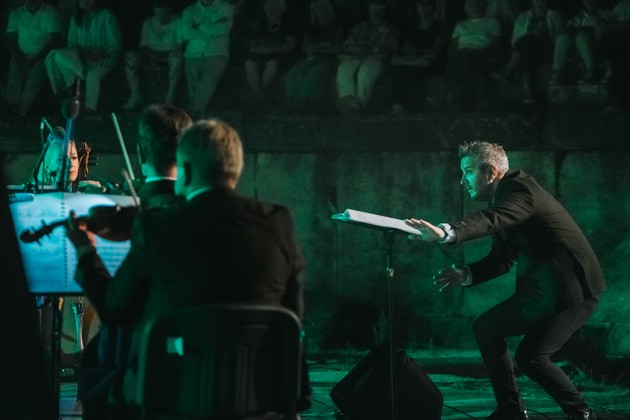
Adapting to the times is inevitable. Today’s audience is different – faster, more visual. That is why we brought a digital approach to our pop and rock projects, with electric instruments and a contemporary stage concept. But what stays the same is the essence: real music is always alive, whatever the technology.
8. In music, DIVA means the very top. How do you see that name in the context of your orchestra?
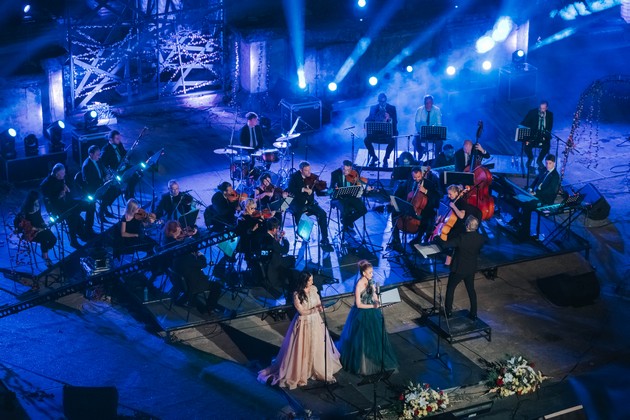
For me, DIVA does not mean the artist’s ego, but the maturity and dignity of the orchestra. It is the road from modest beginnings to cultural maturity. DIVA is the start of a new stage in which experience, knowledge and technology come together.
9. How do you see the relationship between the National Institution and DIVA?
They are two stories that complement each other. The National Institution nurtures the classics, tradition and an academic approach, while DIVA is the living, dynamic and contemporary expression of the same love of music. Both grow from the same root.
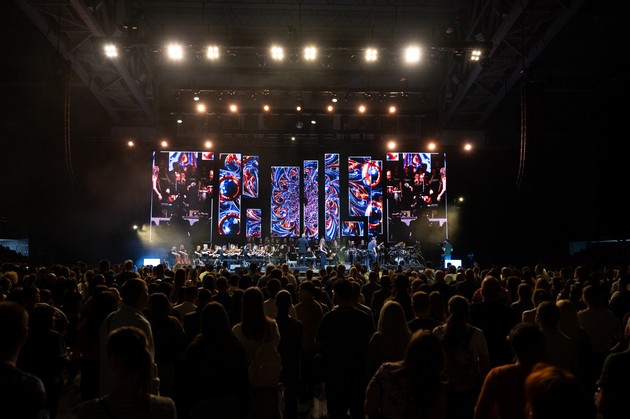
10. You say the orchestra exists “because of and for the audience”. What does that mean to you?
It is simple: everything we do – every note, every concert, every risk – we do for the people who come, listen and feel. Without the audience there is no energy, no meaning, no music.
11. How much does the audience motivate you to create new projects?
When you see a full hall and feel that people leave moved, that is the greatest reward. Macedonia has an audience that understands, that cares and that values quality.
12. After big projects such as Flowers Symphony, Stars Symphony and MTV Greatest Hits, what comes in 2026?
We carry on in the same spirit and with the same energy, towards new symphonic crossovers, tours and regional collaborations. I want DIVA to become a symbol of the contemporary Macedonian musical spirit – proof that the classics can live in the 21st century too, in their own modern way.
13. How do you see the future of the Macedonian orchestral scene?
The future is promising, but it needs a system, continuity and faith. We have talent and we have an audience; we just need to create an environment where musicians can work, grow and create.
14. If you had to describe your mission as an artist in one sentence?
To show that art is not a luxury but a need. And that something can start in Bitola that becomes world-class, yet stays ours.
15. Finally, this year you also received the “Golden Ladybug of Popularity” for the most popular orchestra of 2024. What does this recognition mean to you?
We see it as confirmation that the audience in Macedonia recognises the quality of what we do. It means a lot to us that people follow us, come to our concerts and share their energy with us. We are grateful for the great turnout at all our projects, and we hope we will never disappoint them. And for 2026 we promise new projects for every generation.